Season 2, Episode 10
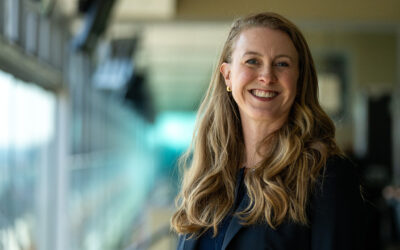
Before she became President of the American Society of Health-System Pharmacists (ASHP), Dr. Melanie Dodd was a Boilermaker through and through. Raised in the West Lafayette area, she grew up with Purdue practically in her backyard—and in her DNA. With both of her parents earning graduate degrees from Purdue and serving on the university’s faculty, the black and gold influence was strong. From early on, Dodd had a deep appreciation for the university community, and her time as a student only strengthened that bond. It was at Purdue where she discovered her path in pharmacy, met her future husband in the jazz band trumpet section, and laid the foundation for a career driven by purpose and leadership.
Today, Dr. Dodd leads at the national level as President of ASHP, the largest association of health-system pharmacists in the country. Her journey from Purdue to the University of New Mexico (UNM), where she earned her PharmD and now serves as Associate Dean for Clinical Affairs, reflects a deep commitment to advancing the role of pharmacists in patient care — particularly in underserved and rural communities. Her two decades of work as a pharmacist clinician specializing in geriatric medicine have given her firsthand insight into how pharmacists can close critical gaps in healthcare access.
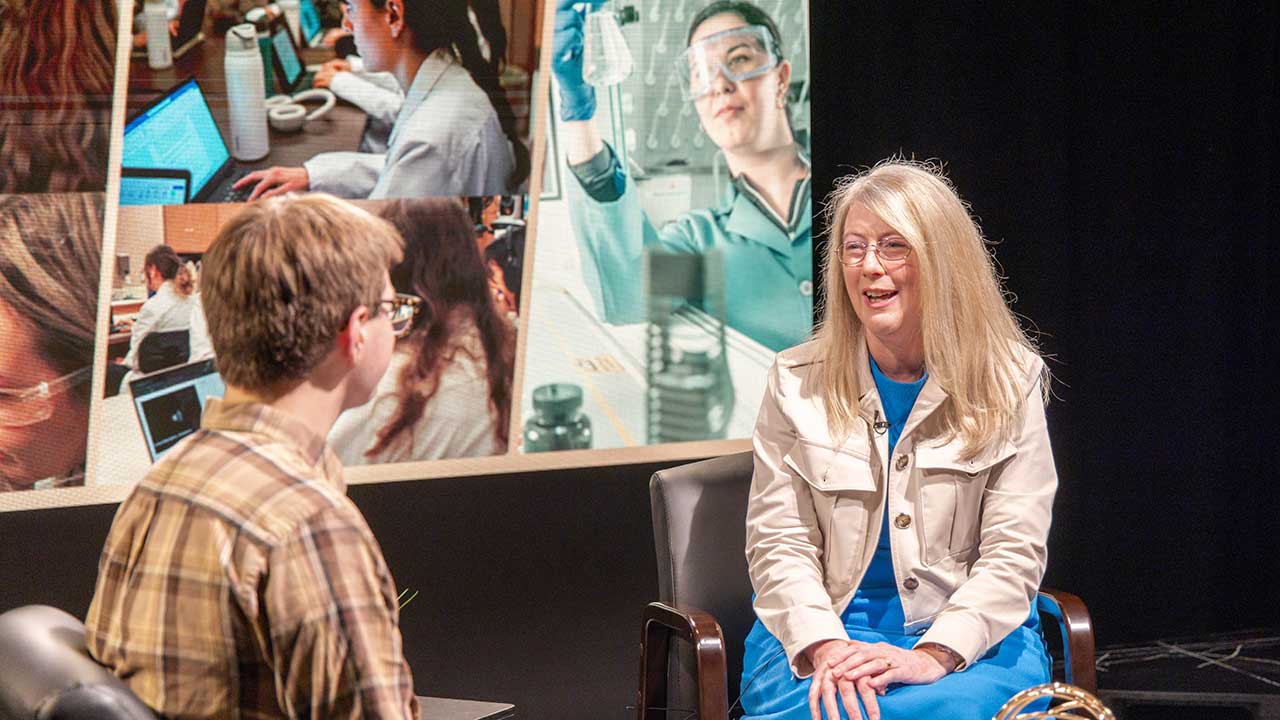
In this episode of Living the Pharm Life, Dr. Dodd shares her personal and professional journey — from Boilermaker beginnings to national pharmacy leadership. She offers advice to young pharmacy students, insight into her vision for the future of healthcare, and stories that connect the dots between passion, practice, and policy. Whether you’re interested in leadership, clinical pharmacy, or simply hearing from someone who has made a lasting impact on the profession, this conversation is packed with inspiration — and a few fun surprises along the way.
Read Transcript
Alex McQuade:
Welcome to Living the Pharm Life, the official podcast of Purdue University’s College of Pharmacy.
I’m Alex McQuade, your host and PharmD candidate, here to highlight the inspiring stories of our outstanding students, faculty, staff, alumni, and friends, who continually work towards excellence in all their pursuits.
Dr. Melanie Dodd is the newly elected president of the American Society of Health-System Pharmacists, or ASHP; the largest association of pharmacy professionals in the United States.
She’s also a proud Boilermaker, having earned her Bachelor of Science and Pharmacy right here at Purdue, before continuing her education and career in New Mexico; where she spent more than two decades reshaping what pharmacist-driven patient care looks like, especially for older adults and underserved communities.
Currently, Dr. Dodd serves as an associate dean for clinical affairs and a professor of pharmacy practice at the University of New Mexico College of Pharmacy.
Her work as a pharmacist clinician, her leadership in geriatric care, and now her role with ASHP, all reflect her deep commitment to expanding the role of pharmacists in the healthcare system.
I would love to thank you so much for being here today, Dr. Melanie Dodd.
Dr. Melanie Dodd:
Thank you so much for having me.
Alex McQuade:
I want to start with your connection to Purdue because you have a very interesting one.
And so, if you could just quickly tell our audience what your connection is to Purdue.
Dr. Melanie Dodd:
Absolutely. Well, I am through and through a proud boilermaker, from the day I was born. I was born and raised right here in West Lafayette, Indiana. Graduated from West Lafayette High School. Both of my parents are Purdue graduates, as well as retired Purdue faculty. So I had Boilermaker black and gold running through my blood from the day I was born.
In addition to that, my oldest son is now a proud Purdue alumni as well, having just graduated in May of ’25, in electrical engineering. And I met my husband here at Purdue, who is a three-time electrical engineering graduate from Purdue as well. And so we have very, very deep family roots when it comes to Purdue University. So it has been wonderful to have that foundation and that upbringing in the Purdue family.
Alex McQuade:
Yeah, one hundred percent Boilermaker.
Dr. Melanie Dodd:
Yes.
Alex McQuade:
Absolutely.
Dr. Melanie Dodd:
Yes.
Alex McQuade:
And so what was it like growing up in this Lafayette, West Lafayette area? I mean, I love it here for the college feel and I work in Lafayette at Parkside Pharmacy, and just the small-town vibe of Lafayette combined with the college town is so wonderful for me.
So I’m curious, from someone who grew up here and has loved Purdue for so many different reasons, if you could just kind of shed some light on that.
Dr. Melanie Dodd:
Well, West Lafayette was definitely a wonderful place to grow up. As you mentioned, it absolutely has that college town feel to it. And I think in addition to that, that bonus of having all those wonderful resources and components of a college town; you have things like theater and music and basketball and football and athletics, and all those things of a large university, but yet, still a small-town feel. Having graduated from West Lafayette High School in a class of 150 students, a very small high school class, but yet, all of these wonderful things around us because of the university.
Alex McQuade:
Yeah, absolutely. I’m sure there was always something to do in high school at night. I mean, where I grew up is pretty small area and there were days where I was like, “There isn’t anything to do.” But if you grew up near Purdue, then you have so many fun activities that you could take part in. So that’s really exciting.
And so I can imagine, I know myself when I graduated high school, I was like, “I want to change.” And so I think a lot of people might think, “Oh, well, you’ve been here your whole life. Do you want to go somewhere new?” What kind of helped you decide to stay and not go somewhere else?
Dr. Melanie Dodd:
Well, I think probably like the average teenager, I wanted to explore the world, and I wanted to see different things. All I, at least in my memory, knew, was West Lafayette. My parents provided me with wonderful opportunities to see the world in different ways. When they were in graduate school, we actually lived in Brazil when I was a toddler, but I don’t have a lot of those memories, but certainly they were engaged in the international world through their professions. And so those were a lot of the stories and a lot of the conversations that happened around the dinner table, were about the global world.
And so I definitely wanted to be able to see on my own, as a young adult, what is that like. But at the same time, I knew I wanted to pursue healthcare. I had had a fantastic organic high school teacher, organic chemistry high school teacher, and I just found it fascinating. I had also volunteered as a candy striper at Lafayette Home Hospital when I was a young teenager and then later went on to work there as a pharmacy intern once I was in pharmacy school, but I knew I wanted to be in healthcare, and I looked at where are the top colleges of pharmacy. And lo and behold, one’s right in my backyard, right?
Alex McQuade:
Yeah.
Dr. Melanie Dodd:
And so it only made sense to continue the family Purdue legacy and to continue on to Purdue, and knowing that I did have the rest of my life to be able to pursue other things.
Alex McQuade:
Yeah, absolutely. No, and that’s so cool that it just kind of worked out perfectly with where your interests lied.
And I kind of wanted to delve further, how did you decide pharmacy was the right path for you and maybe not another healthcare profession or some sort of like organic chemistry field?
Dr. Melanie Dodd:
Well, I absolutely, I knew I loved chemistry, and at the time, I thought, well, maybe I want to go on to medical school and become a physician, but had some family friends that talked to me a little bit about pharmacy and that seemed interesting. And perhaps that was a path to get to medical school, but once I got into pharmacy school, I’m like, “Why would I do anything else? I love what I’m doing-
Alex McQuade:
Yeah, exactly.
Dr. Melanie Dodd:
… I love what this career provides me.”
The opportunity to be the medication expert on the team, to be able to have interaction with patients and families, and to have that human touch and to be a part of improving their healthcare was I think, it was really what I was seeking as I was looking for a career, and pharmacy was the answer, because it allowed me to incorporate that element of chemistry and biology and all the science pieces that I loved, but also that human element-
Alex McQuade:
Yeah, absolutely.
Dr. Melanie Dodd:
… and being able to put those two together.
Alex McQuade:
No, I love the way you described that, and that’s very similar to the reasons why I wanted to go into pharmacy as well.
And just kind of a follow-up to that is, how did you know Purdue’s pharmacy program specifically was the right place for you in that sphere, like how did you know it was the right program?
Dr. Melanie Dodd:
Yeah. Well, I think twofold. I mean, I think, one, it absolutely has always been a highly ranked college of pharmacy, so it has wonderful resources and has accomplished graduates. And I think the other piece that really sealed the decision for me is, I also have a deep love of music; I am a trumpet player as well as piano and love to sing, and I wanted to be able to continue to engage and pursue my music passion as well, and Purdue offers that.
Alex McQuade:
Yeah.
Dr. Melanie Dodd:
I mean, what a fantastic place to be able to continue, in my case, pharmacy, but any STEM field or any other program that Purdue offers, and continue to be engaged in music.
So I was able to play my trumpet all through pharmacy school, was in jazz bands and symphonic bands. And so that was a great escape from all of the other courses that I was taking, and to be able to use that other side of my brain and to be engaged. So to be able to be at a place where I could become a pharmacist as well as incorporate my music on a daily basis was just the perfect match.
Alex McQuade:
Oh, absolutely. And I think that’s something that draws a lot of students here at Purdue, not just being able to pursue music, but there’s so many wonderful outside of school opportunities. And that’s another big benefit of being here at Purdue is, you have that space and that network of people outside of pharmacy. So I think that’s a really good point, and I’m glad that you found that while you were here. It’s good to have an outlet.
Dr. Melanie Dodd:
So let me ask a little bit about you.
So I’ve shared with you a little bit about my passion and how I chose to become a pharmacist; tell us a little bit about your passion for pharmacy, and why Purdue?
Alex McQuade:
Well, I feel like you and I are kind of kindred spirits. I love the description that you gave about pharmacy, and it’s a big reason why I wanted to go into pharmacy and not other healthcare professions.
My mom is a nurse, and so growing up I always got to hear her stories of how she made a difference on the care team and just having that exposure to someone who, in my opinion, is my biggest inspiration, my mom; just the impact she has on people. That’s something I wanted to do.
But I felt like when I was in high school, my interests were much more in organic chemistry and chemistry concepts than in biology sometimes. I liked biology, but I thought, “I’m really good at this chemistry stuff. I need to continue this way.” But when I thought about doing a PhD program, going down pharmaceutical chemistry route, which is a very admirable route, for me, I just felt like I was going to miss that human impact and being able to impact a patient directly.
And so, I decided maybe pharmacy would be the right way to kind of combine those interests. And as I’ve been in college, sometimes I’ve thought about, “Should I consider another career path?” But every time I go back to the fact, pharmacists are everywhere. It’s not just in the retail setting, it’s not just in the hospital setting, there’s pharmacists everywhere doing so many different roles, being the medication expert, like you said, and advocating for patients. And so, I have never really regretted my decision to become a pharmacist because I feel like I could find a role. I think anyone could find a role that they wanted in pharmacy.
Dr. Melanie Dodd:
Yeah. Well, and I know you’re a year away from graduation.
Alex McQuade:
Yeah.
Dr. Melanie Dodd:
So I’m sure you’re starting to think about what’s next, what’s beyond Purdue.
Alex McQuade:
Yes.
Dr. Melanie Dodd:
So what do you think is on your horizon, as you look to the future?
Alex McQuade:
Well, I like to keep my horizon broad, just because I am one of those people who I don’t know if I like something till I try it. That’s what another big pro of the PharmD program is, is being able to go on experiential rotations and try. Go and just see for yourself if you like something.
So I’ve recently had internships at pharmaceutical companies, and so I’m really interested in medical affairs in the industry. I’m really interested in policy, and I think it’s so cool that pharmacists can also have a big role in state legislation and kind of advocate for the pharmacy profession at large.
And so I think something like that is where I’m currently looking, but I loved my hospital rotation; I’ve yet to find a pharmacy job I don’t love.
Dr. Melanie Dodd:
Yeah. And I think that’s the amazing thing about our profession is that there are so many opportunities, and even the job that you select after graduation may not be the one you stay in for your entire career-
Alex McQuade:
Exactly.
Dr. Melanie Dodd:
… because there are opportunities to pivot and to do something different along the way, because your foundational education opens up so many doors.
And I also, as I think to the future, I strongly believe that the jobs that your generation will have, we haven’t even invented.
Alex McQuade:
Yeah, exactly.
Dr. Melanie Dodd:
Right? As we think about artificial intelligence and we think about our changing scopes of practice and what we do as pharmacists, what we’ll be doing in 10, 20 years, many of those environments don’t even exist today.
Alex McQuade:
Yeah, absolutely. I think that’s a good point, too. And that’s why I think they teach us in pharmacy school here at Purdue, to just stay open-minded and teaching us translatable skills that we could use in multiple career fields. And I’m sure it’s that way with all the colleges of pharmacy, but pharmacists really were adaptable. And so I think there’s a big role for us, like you said, in the future with all these new technologies.
And so speaking of change, I know that you made a very big move after you completed your bachelor’s degree in pharmacy. You ended up doing your PharmD at the University of New Mexico, and so I was just wondering, what was part of that decision process to come to New Mexico? And then after that, tell us about your work as a faculty member, there.
Dr. Melanie Dodd:
Yeah, absolutely. So during my time here at Purdue, while playing in Purdue jazz band, I met a fellow trumpet player who became my best friend and has now been my husband for over 30 years. He is a Purdue graduate in electrical engineering, and he was hired to do a postdoctoral experience at San Diego National Labs, which is located in Albuquerque, New Mexico.
And at the time I said, “I am a pharmacist. I can find a job anywhere in this country.” Right? Which is very true and continues to be true to this day.
Alex McQuade:
Yes.
Dr. Melanie Dodd:
And so I followed the love of my life to Albuquerque. At the time, other than when we went out for his job interview, I had never been to New Mexico. I knew Santa Fe was the capital. I knew where it was on the map, but didn’t really know a lot about New Mexico, but it is absolutely the land of enchantment; it is a beautiful place in so many ways, from the landscape, to the food, to the culture, to the people, and professionally an amazing place as well.
I graduated from Purdue in 1994, and in 1993 the state of New Mexico was the first state to pass legislation for an advanced practice license, which is the pharmacist clinician license, which allows for broad prescriptive authority. It was first in the nation, it was not a model of care that I had been introduced to during my training. It was very, very new to our profession.
And the pharmacists of New Mexico, as well as many stakeholders, were answering a community need. That still continues to this day, which is access to healthcare for underserved populations, especially in rural parts of our state. New Mexico is our fifth-largest state geographically in the country, but it only has a little over 2 million people in it. So it’s a very rural state. 32 out of the 33 counties are underserved, with about a million people that live in Albuquerque, and the rest of the million are spread throughout those other 32 counties. So you can just imagine how rural a lot of those communities are.
And pharmacists are absolutely in a prime position to be able to be the front line of healthcare, and to deliver primary care services in a variety of things. And it was because of that opportunity to be able to work as a pharmacist clinician that has absolutely kept me in New Mexico, along with all those other wonderful things about the state.
But you asked, okay, how did I get to the PharmD and what does that look like. So I finished a five-year BS in pharmacy degree at Purdue, and then the job market was tight when I did get to Albuquerque. I knew I wanted to pursue something that was clinical. I’d had internship experiences in hospitals, here at Lafayette Home Hospital; and so that was what I was really looking for. But there weren’t any hospital positions to be found when I initially moved there, but so I took on some other opportunities. I did have a chance to work out at Acoma-Canoncito-Laguna Pueblo, Which is one of the Indian health models, which, again, is a very progressive model in terms of delivering high-level clinical services in an ambulatory care environment. So I had some exposure to that, but it was only a temporary position filling in for somebody who was out on leave.
And so then I had to look for something else. And I found a position working in an early mail order facility, which was, again, a very different environment to be able to work in a mail order environment. I had one day a week where I was on the phones, calling patients, but otherwise I was in the warehouse next to the conveyor belt where there were totes going by with prescriptions that had been filled, and I was checking those prescriptions. So I was lifting totes off the line, checking prescriptions, putting them back on the line.
So very, very minimal patient interaction, and I desperately was seeking that opportunity to interact with patients and to interact with the healthcare team. And I was not able to do that in that particular position. At the time, the University of New Mexico had a post-BS Doctor of Pharmacy training program, which was a two-year program. And I said, “Okay, this is another path. This is an opportunity to be able to, again, pursue my dream of being able to practice clinically and to be able to engage with those healthcare teams.” So I applied to the program and completed my Doctor of Pharmacy degree at the University of New Mexico College of Pharmacy, and then went on to do a postgraduate one-year residency training program at Presbyterian Healthcare Services, which is located in Albuquerque.
Alex McQuade:
Wow. So you did so many different pharmacy roles just right after moving to Albuquerque, and just it’s so cool to see how much you were able to translate your pharmacist skills that you got here at Purdue into so many roles. And then two, to go back to school and do that residency training and kind of specialize in what you really wanted to do is really awesome.
And so then, I’m sure that during that process, you may have gotten some inspiration for being a faculty member at UNM. So I guess, what has been a rewarding part about being a faculty member there, and what has it looked like for you, when did that all happen?
Dr. Melanie Dodd:
That process, there’s always a transition as you translate from being the learner, to now being the teacher. But I think one of the fantastic things about residency training is it allows that transition, and you are a learner, but you’re also starting to learn to be a preceptor and to educate others. And so, that really prepares you well to be able to move into some new positions.
And for me, I had the opportunity to step into a really fantastic role as the clinical pharmacist for our state New Mexico retrospective drug utilization review program, and to be able to oversee that program. And during that time, developed further skills in working with Medicaid and policy, also began to precept students during that time in our DUR program, there at the college.
And so those were really, continued to be formative for me in developing my skills. I had fantastic mentors that continued to support me, began to do more research with our Medicaid program, and so continued on that research path. So really picking up from some of the skills that I had learned during my residency to then transition. But I think throughout all of that, having mentorship and having support with you throughout your career is really key, no matter what stage you are in your life.
Alex McQuade:
No, it’s so awesome that you had that support network and that you were able to inspire so many students while you were there.
I’m curious, too, then, like you worked on that drug utilization plan, which was really awesome and kind of gives you a more macro scale of the impact that you can have as a pharmacist, but then I saw that you later shifted your focus to geriatric medicine.
So I’m curious, what inspired that shift and what, again, do you think is so rewarding about working in the field of geriatrics?
Dr. Melanie Dodd:
Yeah. No, I absolutely enjoyed my time that I spent with our Medicaid DUR program, and those were skills that were invaluable to me that I continue to use to this day in a lot of my other roles. But at the time, our state Medicaid program shifted from being a hundred percent fee for service model to managed Medicaid. And when they made that transition at the state level, the retrospective DUR activities shifted from being at the College of Pharmacy and went to the managed Medicaid program. So there was no longer that need at the College of Pharmacy.
But the opportunity was great in that we had another faculty member that was shifting roles. That opened up a position for me in geriatrics, which had been one of my other loves during residency, as well as during my PharmD training. I had been able to work in our geriatric senior health clinic at UNM. I’d also had some experiences working in long-term care during my training, and had always loved and continue to love the joy of being able to work with older adults, as well as that clinical challenge of the complexity that comes with aging.
As many of us know, as we age, we may develop additional chronic conditions, we may need to utilize more medications, and those are great opportunities for pharmacists to be involved. And so we had an established at our University of New Mexico Senior Health Clinic, a pharmacist clinician position. And so I was able to utilize… I had been trained to be a pharmacist clinician during my PharmD training, and so I was able to step into that position.
And it brought back, again, that additional joy. I now had the patient contact that I was still missing. And so I was able to transition into that role and continue to be the pharmacist clinician in our UNM Senior Health Clinic to this day, as a part of a large interprofessional team. UNM is a part of an academic medical center, so we have lots of learners that are a part of our team, as well as a broad interprofessional team supporting our older adults there.
Alex McQuade:
That’s so exciting, too, because like you said, the geriatric population, they have sometimes a lot more medications to manage, and there is such a big role for pharmacists on the team. I mean, other healthcare providers oftentimes come to pharmacists for a lot of answers.
And so it’s so cool that you had the opportunity and still have the opportunity to be a practicing clinician pharmacist. I think that’s really awesome. And it sounds like that move to New Mexico really was a great opportunity for you to explore so many different careers in pharmacy and find what you truly love.
And I know that some of the people who are listening to this podcast may be prospective students, people like myself in pharmacy school, who have their future ahead of them with so many options.
What advice would you give to young students about where they should end up or how to find the right fit for them, in a land of opportunity that we’re entering here?
Dr. Melanie Dodd:
Well, I think it’s always, I think for all of us, it’s important to think about our why – why did we choose to pursue our given career, and also, to think about what brings you joy, on a daily basis. And my hope for everyone is that they can have a career where both can happen. You can answer your why and it brings you joy at the same time.
And so, I think it’s important for people to look for that as they pursue careers, as they select and apply for specific jobs as they go out into the workforce. And if there ever becomes a time when the why isn’t being answered or the joy isn’t there, obviously those are reflection points to think about, okay, what has changed, what is different?
Maybe that’s a pivotal turning point in your career to pursue other things or to change something within your current position, to have those conversations with leadership and say, “Okay, maybe we should look at new opportunities. Maybe there’s a way to add additional clinical services or to expand our team or to do things in a different way.”
But I think always to be thinking about those pieces and to stay core to your principles, and to answer that why and to make sure you have joy in what you’re doing and to make sure you’re taking care of yourself, too, and that self-care is always essential.
Alex McQuade:
Oh, that’s such great advice. And I think it’s not only for students, like I said, but that’s applicable for everyone. And even people who are listening who aren’t pharmacists, I mean, I think there’s a lot to learn from that, but I think it’s so awesome that our career of pharmacy is one where you can make those kind of moves and changes, and we can really adapt with how the future is moving, it’s not a stagnant role, we have so many opportunities for growth.
Dr. Melanie Dodd:
Right, right. So I think you mentioned the future, and I truly believe the future is bright for healthcare and for pharmacy, in particular.
So Alex, as you think about the future, what is your take, what does it look like for you, both personally as well as you think more globally about the profession, and then to think about how do you see the needs of patients changing, and how do you think we as pharmacists can respond to those changing needs?
Alex McQuade:
That’s a really great question, and one that is loaded and everyone will probably have a different answer in their heads. But I think as we talked about before, pharmacists are supposed to be very adaptable. That’s just how we’re built, how we’re trained. And so I think that’s something that I knew coming into pharmacy school; and when I think about the future of pharmacy, I think about all of the opportunities we have to serve populations, like you mentioned before, the rural health populations are geriatric patients who may have restricted access to healthcare, long travel times, maybe some difficulties with health literacy. There are so many opportunities for pharmacists to step in and take over.
So I’m really excited to see all the legislation that’s coming down the pipeline where pharmacists can have some prescribing authority or opportunities to have one-on-one appointments with patients, because I personally believe that pharmacists are the most accessible healthcare provider, and if I didn’t, I wouldn’t be in the College of Pharmacy. I just see so many opportunities for that.
And then also I see opportunities, we’re seeing the rise of AI. Some people are scared of it. I personally am excited about how much it could increase our efficiency and allow pharmacists to have more time for those interactions with patients and less time doing all of those logistical things. So I think there’s a lot of opportunities there. And it’s really exciting seeing someone like you who has had so many experiences in different healthcare settings, being the president of ASHP, you have a lot of opportunity to inspire people who are in so many different career paths.
And as we’re seeing the future of pharmacy coming to us with all these new innovations, you kind of have that perspective of what it’s like to be in different settings, and that kind of helps us grow as a profession. So just want to say, quick plug for you that it’s really awesome that you’re here with us and that you are the president of ASHP. I think that’s super exciting, and that kind of transitioned to my next question.
Many listeners here will be excited to know we have the ASHP president on the podcast with us today. So congratulations on that role. I’m sure that is a career peak, a career highlight. So super exciting.
For those who may be living under a rock and don’t know about ASHP, do you think you could give like a quick rundown of the goals of the organization and just kind of what the mission is of ASH?
Dr. Melanie Dodd:
Yeah, absolutely. Absolutely. ASHP, which is the American Society of Health-System Pharmacists is the largest pharmacy organization here in the U.S. with greater than 60,000 members, consisting of pharmacists, pharmacy technicians and student pharmacists as well. And it represents all of our members that are practicing in hospital and health system settings.
The vision of ASHP is that medication use will be optimal, safe, and effective for all people all of the time. And that’s a huge vision, right? But I think something that we as a pharmacy profession are well-prepared to support and to accomplish. But it takes all of us, it takes a team to be able to accomplish that vision.
And with ASHP, our strategic plan and our organization supports its members, as well as the profession in a variety of ways. We have multiple sections that support all of the various subcomponents of practice, everything from pharmacists that are practicing in community settings or ambulatory settings, to pharmacists that are practicing in informatics, as well as our inpatient settings. And so really across the board. And wherever you may be practicing within a health system, there is a home for you within health systems.
In addition, we have our student forum, as well as our new practitioner forum, for those that are within five years of graduation. So again, being able to support all of those entities. And a new organization that has a direct dotted line to ASHP is The Pharmacy Technician Society or TPTS. And so we’ve got a great new home for technicians, and strongly believe that it takes the entire pharmacy workforce to be able to achieve that vision of making sure that medication use is optimal and safe. And so being able to support our technicians in their new roles, as well as supporting our pharmacists.
And we’ve also been spending recently more time on artificial intelligence, and recently had an AI forum to look at some of those future endeavors and how we support that. We have a section on digital health, as well as informatics that are looking at some of those different components. So it truly is, it is an honor, and an honor and a privilege to be able to serve such an amazing organization that is supporting our profession in so many different ways.
I think the other powerful way that our professional organizations continue to support our profession is through its advocacy, and ASHP along with our other organizations have been right at the forefront of driving change from policy perspective. Not only does ASHP have a whole library of policies, of different components and things that we stand behind that happen and are developed through our various councils and ultimately are approved by our House of Delegates. And I had the opportunity to serve as the chair of our House of Delegates, overseeing the policymaking process. But also our government relations team is very strong, along with our membership to make change, like we were talking about the ability to prescribe.
We can now say that all 50 states have some form of either collaborative practice agreements that allow pharmacists to prescribe or standard of care. Along with all 50 states, pharmacists can now prescribe and administer vaccinations, along with things like hormonal contraception and tobacco cessation, and point of care test treat for respiratory illnesses. So all of our states are moving forward in terms of advancing the scope.
And that is because of advocacy, of our profession, and our students are a core part of that and helping to move that forward. And a lot of things are happening, right at the grassroots level, at the state level, we’re seeing lots of progression. And as we look even over just the last three years, we’ve seen tremendous change and in the scopes of practice that pharmacists have at the individual state level, along with advocacy that is occurring for reimbursement for those clinical services. So looking at reimbursement from Medicaid and commercial insurance plans.
So we’re seeing change happening there, but we still have more work to do. We currently, for those that are not aware, pharmacists are not recognized as providers under Medicare Part B, which limits our ability to be reimbursed for delivery of services to a Medicare patient. So that continues to be a challenge, but we have legislation that is sitting in our House and Senate right now, so in Congress right now to address that. And that is something that ASHP continues to support. Next week, I will be in DC On The Hill, advocating for all the many issues that are impacting us as pharmacists, and healthcare in general, but one of those will be continuing to fight for provider status for us as pharmacists.
Alex McQuade:
Wow, that’s so inspiring all the things that you get to be a part of, not only as a president of ASHP, but through the different ways you’ve been involved with the organization. I mean, like you said, it represents all practicing pharmacists and the pharmacy team. Love the plug that you gave for the technicians. We love our technicians here.
Dr. Melanie Dodd:
Absolutely.
Alex McQuade:
They make the world go around, and I think it’s awesome that they’re being recognized more because they’re essential to the pharmacy team.
And so, I’m kind of curious, too, when in your career did you become involved in ASHP? And I know you mentioned some of the committees that you got to be a part of, but maybe talk a little bit more about your involvement.
Dr. Melanie Dodd:
Yeah, absolutely. I’ve been a member of ASHP since I was a student here at Purdue.
Alex McQuade:
Oh wow, that’s so exciting.
Dr. Melanie Dodd:
So I was a part of our Student Society of Health-System Pharmacists. So every college of pharmacy in the U.S. has an SSHP. And so I highly encourage students to get involved with your professional organizations, check out your various student organizations that support your profession.
In addition to that, we have state affiliates at the state level. So once I moved to New Mexico and during my residency, my residency program director was involved with our New Mexico Society of Health-System Pharmacists and she was going to an education committee meeting, she said, “Come with me.” And I said, “Okay, I’m open to new opportunities. Let’s go check this out.”
And so I went to that first education committee meeting, before I knew it I was chair of that education committee, in planning our education for our state professional meetings, and later went on to serve NMSHP as treasurer and ultimately as president of the organization. And during that time, I continued to learn more about policy and advocacy, and I caught the bug. I absolutely caught the bug, and was able to serve as the New Mexico delegate to the ASHP House of Delegates. Every state has two or more delegates to our House of Delegates.
And so I was able to be one of those two delegates for New Mexico, and got to experience the policymaking process within ASHP, and discovered the power of the word. And a plug to remember, that our words matter, and they make a difference in the lives of our patients, in the lives of our communities and in our profession. And I saw that firsthand in being able to serve in our House of Delegates, as we went through the policymaking process of establishing those professional policies that support and outline what we believe in, and what our vision is and what our visionary goals are within different components, whether it’s education or clinical practice, whatever that looks like.
And so I got involved there and then was able to, I was appointed to our council on public policy, and was able to serve on that council and ultimately chaired that council, which is one of the policymaking bodies for ASHP. And then after that, was able to serve on our section of ambulatory care practitioners. So putting my clinical skills to work and my role in geriatric primary care and ambulatory care, I was able to serve in that section that supports ambulatory care practitioners.
And during that time, it was fantastic because we were able to publish the statement on the role of pharmacists in primary care. So again, thinking to the future and what we can do. So was able to be in all of those different roles. And then I was tapped on the shoulder and they said, “You would be really good at chairing the House of Delegates,” which was not something that I saw in myself. Even though I had been a member and serving in the House of Delegates for greater than 10 years at that point, but it took, again, a mentor to recognize that skill in me that I didn’t see.
And so I put my name into the pool to potentially be considered, and ultimately was elected as chair of the House of Delegates. And I completed that role in 2024. And the chair of the House of Delegates is also a member of the board of directors for ASHP. So I got, again, some additional leadership opportunities and training, and learned even more about ASHP and how we can serve our communities. And then most recently was elected as president, and as president elect in 2024 and was just installed in June of 2025.
Alex McQuade:
Wow. That is so cool, too, that you’ve been able to see so many different levels of leadership, too, on your way up here as president, just because you know what matters on all levels. It’s, you know what everybody needs, and I think that really does help you serve as a great president. So super exciting, and I hope that this year is super fulfilling for you and you’re able to achieve so many of the goals that you have.
And one that resonates with me, specifically, and that we kind of touched on earlier, and you mentioned the role of pharmacists in primary care, just because we have a lack of access to primary care in so many places. And so if maybe you could just shed some light on how you think pharmacists could step in and transform that landscape.
Dr. Melanie Dodd:
Yeah, absolutely. Absolutely. Well, we know as a profession the impact that pharmacists make on our patients’ lives in all settings. But specifically to your question with regards to primary care, we were talking about access. We know, depending on your community, you’re typically within one to five miles of a pharmacist, from wherever you live in this country. Pharmacists are right there at the frontline, in particular, our pharmacists that practice in community settings, as well as ambulatory settings. And so these are opportunities for us to step in. And as we look at the literature, we can see that when we do place a pharmacist on a team, like an ambulatory care team, it’s been demonstrated that for every dollar that we invest, there’s a $4 return on that investment.
We also know that we have, in this country, a healthcare workforce issue that needs to be addressed, and I strongly believe that pharmacists are part of that solution, and we have opportunities to be able to support primary care needs. We have a shortage of physicians currently in this country, and it’s been shown that for every pharmacist that you place on a team for a year, if you have one full-time equivalent pharmacist for a year, that can open up up to 1,900 clinic visits for a physician. So it’s expanding care, right? So pharmacists may take on roles of managing chronic diseases; so they may be the one. In my setting, I’m able to manage, for example, patients’ diabetes management. So I’m the one that manages all of their diabetes care. Their primary care provider is addressing other things in their healthcare, but I’m able to take on that responsibility for them, and that shared relationship in terms of managing their diabetes.
And there’s so many other things that we can do as well, but those are ways that we can increase access to primary care for all patients across the age spectrum, to be involved in a variety of ways; whether it’s chronic disease management, it’s being engaged in some of the specialty arenas, that we can really be there to provide education, to prescribe medications, maybe more importantly, to de-prescribe medications, to address polypharmacy, to take away those potential medication related problems that may be going on in the patient. But having that pharmacist as a part of the team, the medication expert that can really be there to help optimize their care, I think are tremendous opportunities for us to continue to find sustainable business models that work across this country, for pharmacists to be a part of the primary care team; and that may be in a community pharmacy setting, that may be in an ambulatory, more traditional physician type office setting, and I think it will be both, but for us to look at what those models look like so that patients can access that care that they need.
Alex McQuade:
Yeah. And like you said, it helps out with the healthcare worker shortage as well and having that spread of responsibility and working on a larger team where everybody can kind of work together for the best solution.
I’ll give a personal, quick anecdote. When I worked in my institutional IPPE at a rural hospital, they were just starting to implement putting a pharmacist on the floors. So before it was just a centralized pharmacy, but I got to shadow pharmacists for about a week, just on different floors. And I can’t tell you, we didn’t have a single minute of rest, because every time there was a patient problem with the medication, we had a healthcare provider coming to us asking for guidance and advice.
And I just thought about my time working in a community pharmacy, how many times I’ve looked at a patient’s profile and been like, “They shouldn’t be on this medicine, or we could help optimize their care.” But because there’s that disconnect sometimes between healthcare providers, it can be difficult. So I love your mission and your goal because it benefits everyone, so it’s a no-brainer to me.
Dr. Melanie Dodd:
Yeah. And we’re absolutely, we’re those connectors, right?
Alex McQuade:
Yeah.
Dr. Melanie Dodd:
Because a lot of times it’s the medication that’s right in the middle that helps, it paints the picture, it tells a history, it tells a story about that patient’s clinical situation, and we as pharmacists are the lens that can interpret that for both the patient, as well as the rest of the interprofessional team that’s caring for the patient. And we’re likely the only ones on the team that have a lens that are considering that everything is potentially medication induced until proven otherwise.
Alex McQuade:
Right. Yeah.
Dr. Melanie Dodd:
That potentially the symptoms that a patient may be experiencing may be as a result of the medications that they’re taking that others may not be thinking about, and we are an important part of that solution to help support that patient.
Alex McQuade:
Yeah, absolutely. I think that’s a wonderful goal to have and I’m looking forward to seeing how your presidential year unfolds and seeing what impact ASHP has. I’m already obsessed with how ASHP has been there for me as a student, so I can’t wait until I’m a fully formed pharmacist and can see it on the other side too.
So we have a tradition here on Living the Pharm Life. We keep things serious and learn about what’s going on in the world of pharmacy, but we also like to have a little bit of fun. So I have one fun question for you as we wrap up.
If your career had a theme song, what would it be?
Dr. Melanie Dodd:
That is always a hard question. As a lover of music, and specifically as a lover of jazz music, there are lots of great tunes. And I grew up in a household of listening to jazz and classical music, and I honestly did not know that rock music existed until I was a teenager. And so that’s a core part of my upbringing. And so what always comes to mind as I think about your question, I think about the role of women in leadership and the role of women in pharmacy, and that is absolutely, I think, an important thing and something that’s come a long way in terms of opportunities for women to serve. And that brings me back to some of the great ladies of music. And so Ella Fitzgerald comes to mind to me.
Alex McQuade:
Oh, wow.
Dr. Melanie Dodd:
She was a great improviser. She was clearly the queen of song, lady of jazz, and an amazing leader in her own right, in a time, back in the 1940s, ’50s time, when that was not a common thing. But she absolutely, she had this gorgeous voice that connected people, that allowed you to feel that calm, but also she was able to pivot. She was able to turn, she was able to drive the field of jazz music and lady song singers of the time.
And for me, that describes a lot of some of my core principles and goals and visions and what I want to be a part of, and to be in that legacy that I would love to have, to be able… She was a mentor. She was a collaborator. She was interdisciplinary. She worked with her jazz team. She interacted, and scat singing is exactly that. And jazz, jazz solos are exactly that, it’s a back and forth between the players that are a part of the band.
Alex McQuade:
It’s a lot of trust, too.
Dr. Melanie Dodd:
And you have to trust each other. But you’re also, you’re driving the rhythm. You’re driving the beat, and you’re driving it forward, and she did that. She definitely drove the beat. She allowed the rhythm to change. And I hope that we can allow our rhythm to change the world as pharmacists.
And so, getting back to your original question, what would be my theme song? It would have to be Ella Fitzgerald – It Don’t Mean A Thing (If It Ain’t Got That Swing).
Alex McQuade:
Oh, that’s my theme song for the rest of the day. That is a wonderful answer. And you turned my fun question into an inspirational moment for me. I love how you compared what you want to do to the field of jazz and Ella Fitzgerald, I mean, that was just incredible.
And it just kind of brings me a lot of hope for the future of pharmacy. We have amazing leaders like you here who are advocating for pharmacists to continue to push forward, to be accessible and interdisciplinary workforces that can really just increase patient outcomes everywhere. So we’re entering a really cool time.
And it was such an honor to have you on Living the Pharm Life today. I’m incredibly inspired by all the work you’ve done and are continuing to do, and I hope someday to have a fraction of the impact that you do. So with that, we will close out the episode, but thank you so much for joining us, Dr. Dodd.
Dr. Melanie Dodd:
Thank you so much for having me. And Boiler Up!
Alex McQuade:
Yep, Boiler Up!